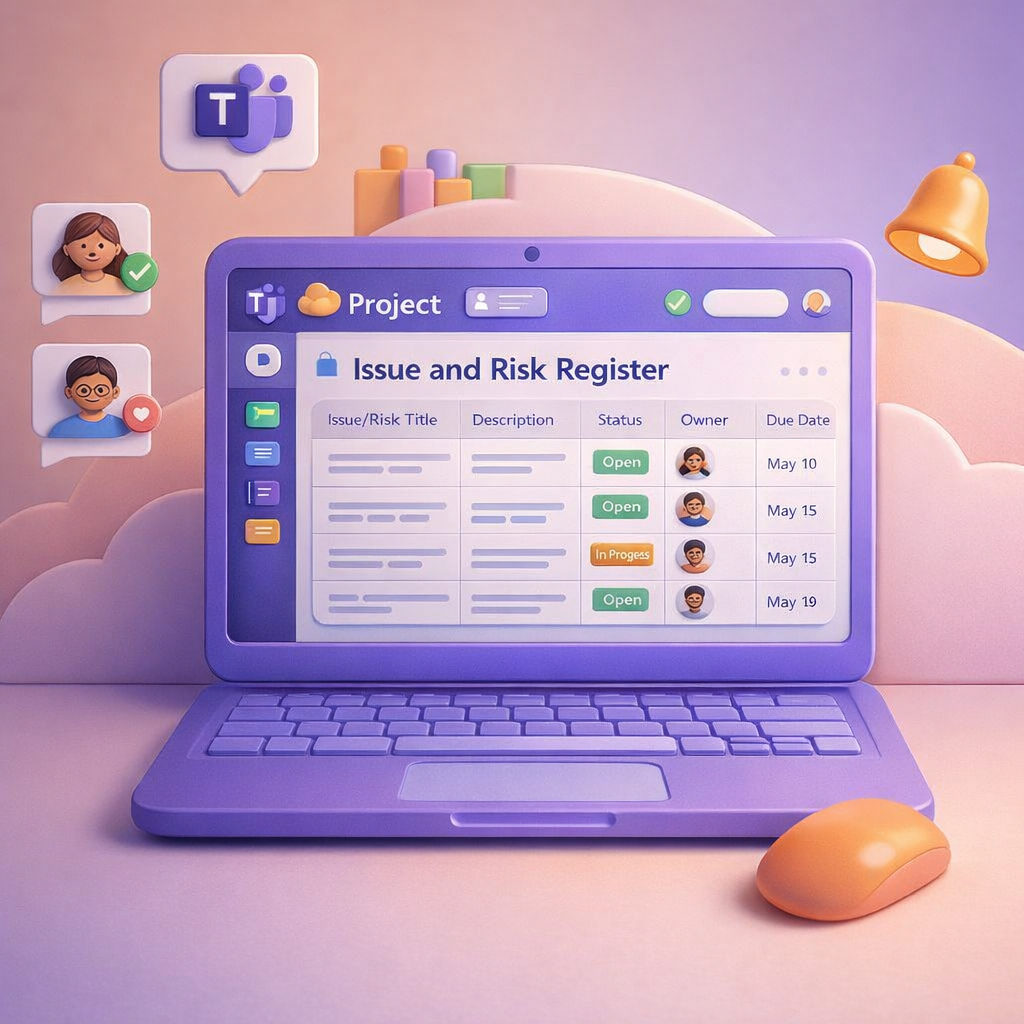
In yesterday’s blog, I looked at how Microsoft Teams can become the central hub for managing your project, conversations, meetings, tasks, and decisions all in one place. Today, I want to zoom in on something every project has (but few handle well): risks and issues. Most projects don’t fail because risks weren’t raised. They fail because risks were buried in chat, lost in meeting notes, or never tracked properly once identified. This is where Teams, Microsoft Lists, and Copilot work beautifully together.

When people think about project management, they often picture complex tools, rigid templates, and admin overhead that few people enjoy. In reality, most projects succeed or fail based on communication, shared understanding, and follow‑through — and that’s exactly where Microsoft Teams excels. When used intentionally, Teams becomes a single, structured space for conversations, documents, meetings, tasks, and decisions, instead of information being scattered across inboxes and personal drives.
 Tracy van der Schyff